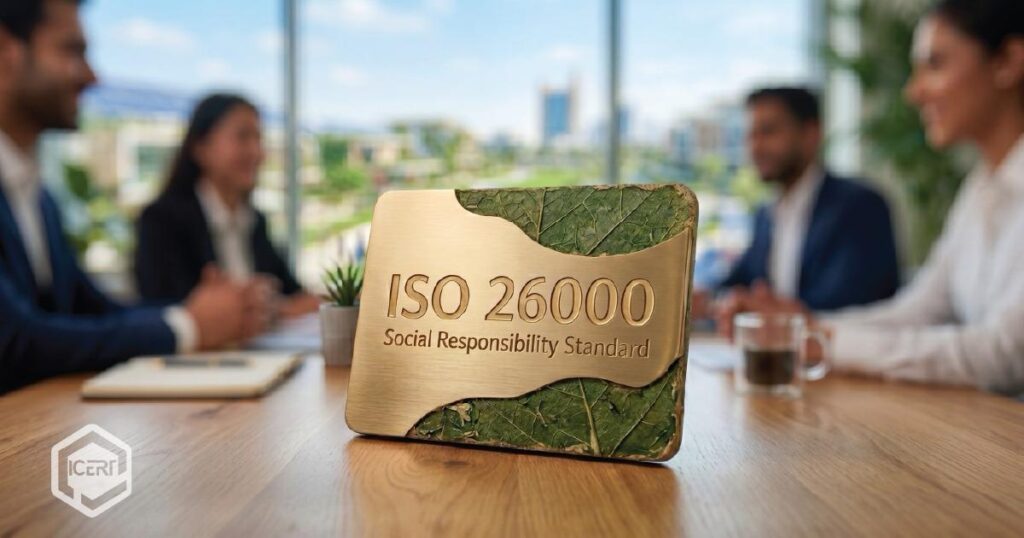
In the current GCC business environment, the complexity of operations—spanning multi-jurisdictional supply chains, evolving regulatory landscapes, and heightened investor scrutiny—demands a robust approach to corporate governance. For board members and C-suite executives, ISO 26000 provides a foundational guidance framework to embed operational ethics, systemic accountability, and long-term risk management into the organization’s core strategy.
Unlike standard management systems that focus on specific technical processes, ISO 26000 offers an institutional architecture for organizational responsibility. It allows leadership to harmonize business objectives with global expectations for transparency and ethical conduct, ensuring organizational resilience in an increasingly rigorous marketplace.
1. Governance as the Foundation of Risk Mitigation
At the heart of ISO 26000 is the principle of Organizational Governance. For a corporation, this is the mechanism by which the board establishes the values and decision-making processes that permeate the entire value chain.
By adopting this framework, leadership can systematically address operational and reputational risks:
- Accountability and Transparency: Establishing clear lines of reporting and decision-making that withstand rigorous internal and external oversight.
- Systemic Risk Mitigation: Identifying vulnerabilities within the supply chain, such as ethical lapses or mismanagement, before they escalate into institutional crises.
- Value Chain Resilience: Ensuring that all stakeholders—from suppliers to strategic partners—align with the organization’s ethical standards, thereby protecting the company’s long-term reputation.
2. Navigating the Core Subjects of ISO 26000
ISO 26000 identifies key subjects that represent the pillars of responsible corporate conduct. When applied as a strategic management tool, these subjects allow leadership to map their operational footprint and identify areas for improvement:
- Organizational Governance: The decision-making system that drives ethical performance and compliance.
- Human Rights: Due diligence processes to identify, prevent, and mitigate risks of rights violations within the company’s broader ecosystem and its suppliers.
- The Environment: Integrating resource efficiency and environmental protection into the organization’s long-term strategic planning.
- Fair Operating Practices: Implementing anti-corruption policies, promoting ethical behavior, and ensuring integrity in dealings with competitors, suppliers, and government entities.
- Consumer Issues: Ensuring safety, fair marketing, and robust data protection protocols across all business units.
- Community Involvement: Aligning corporate projects with regional socio-economic development goals, such as those outlined in national visions across the GCC.
By addressing these core subjects, an organization moves from reactive management to a structured state of readiness, enhancing its ability to navigate the complexities of the GCC industrial and engineering sectors.
3. Strategic Alignment with Regional Economic Goals
For GCC-based corporations, ISO 26000 acts as a bridge between international best practices and regional strategic objectives. As the UAE and the wider GCC move toward advanced industrialization and diversified economies, the ability to demonstrate high-level corporate governance is a competitive necessity.
The framework enables firms to align their internal systems with national mandates for ethical operation and sustainability. This alignment is critical for organizations seeking to participate in large-scale infrastructure projects, public-private partnerships, and international business collaborations, where verifiable governance standards are increasingly a prerequisite for engagement.
4. Why ICERT Gulf for Institutional Advisory
Implementing the guidance provided by ISO 26000 requires an institutional assessment of how an organization operates. ICERT Gulf serves as a strategic partner to boards and leadership teams, facilitating the transition from abstract guidelines to actionable operational strategy.
Our Expertise in Corporate Governance:
- Stakeholder Mapping: We assist leadership in identifying the specific interests and expectations of key stakeholders, ensuring that governance strategy is informed by data.
- Gap Analysis: Our consultants provide a comprehensive review of existing internal systems to determine their alignment with the ISO 26000 framework.
- Value Chain Assessment: We help identify potential governance risks within your operational ecosystem and recommend strategies for mitigation.
- Measurable Integrity: We focus on translating international guidance into quantifiable operational metrics, ensuring that ethics remain a manageable and monitorable business function.
With over 15 years of regional experience, we bring a depth of understanding to the unique corporate challenges of the GCC. Our focus is on fostering an environment where institutional integrity is a driver of long-term stability.
Elevating Institutional Readiness
As the GCC corporate landscape continues to mature, the importance of a structured approach to governance cannot be overstated. ISO 26000 offers the institutional framework necessary to secure operational resilience and ensure that leadership is equipped to navigate the demands of a globalized economy.
Effective governance is a continuous process of evaluation and refinement. By partnering with ICERT Gulf, your organization can move toward a more disciplined, accountable, and strategically aligned operational future.
Is your board prepared to formalize its governance framework?
Contact ICERT Gulf today to schedule an ISO 26000 Gap Analysis and stakeholder mapping session. Let us assist you in embedding lasting integrity into your corporate strategy.