In the fast-evolving business landscape of April 2026, the term “Corporate Social Responsibility” (CSR) has undergone a radical transformation. Gone are the days when a simple annual donation to a local charity was sufficient to satisfy stakeholders or the Board of Directors. In the modern GCC market, led by the ambitious strides of the UAE and Saudi Arabia, social responsibility has shifted from a peripheral “feel-good” activity to a core strategic mandate.
As we navigate the second quarter of 2026, the integration of ISO 26000 (Guidance on Social Responsibility) is no longer a luxury for the elite; it is a prerequisite for any organization aiming to secure high-value government contracts or attract global investment. For businesses looking to maintain their edge, working with experienced ISO certification consultants GCC is the first step in turning ethical behavior into a measurable commercial asset.
The Death of “Check-the-Box” CSR
The very evident global shift toward Environmental, Social, and Governance (ESG) frameworks has officially reached its peak. In the UAE, the Dubai Economic Agenda (D33) (External Link) and the UAE Vision 2031 (External Link) have set clear benchmarks for sustainable and ethical business growth.
Companies can no longer hide behind glossy brochures. Today’s investors, employees, and, most importantly, government procurement officers are looking for radical transparency. They want to know: How does your organisation treat its migrant labor force? Is your supply chain free from human rights violations? What is your actual, audited impact on the local community?
This is where ISO 26000 comes into play. Unlike other standards, ISO 26000 provides a comprehensive, all-round guide rather than a checklist for certification. It forces a deep, internal audit of how an organisation operates in the real world.
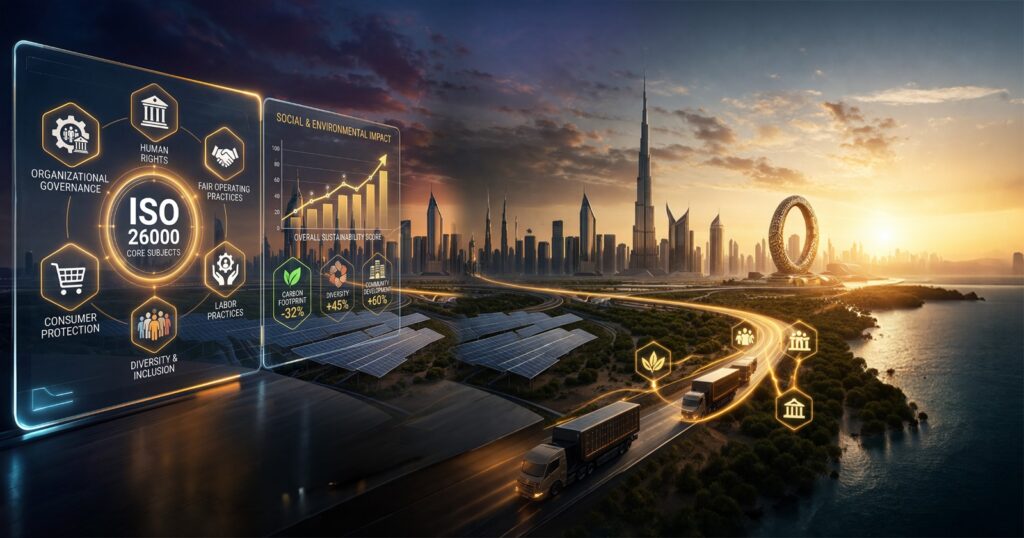
ISO 26000: The Seven Core Subjects of Ethical Leadership
For any company to turn social responsibility into a competitive advantage, it must master the seven core subjects defined by the International Organisation for Standardisation (ISO) (External Link).
1. Organisational Governance
Everything starts at the top. In 2026, governance isn’t just about financial audits; it’s about ensuring that social responsibility is a permanent agenda item in the boardroom beyond just surface level.
2. Human Rights
Especially critical in the GCC, this subject focuses on due diligence, resolving grievances, and respecting civil and political rights throughout the workforce.
3. Labor Practices
From health and safety to social dialogue and human development, your treatment of employees is now a public metric of your brand’s value.
4. The Environment
While ISO 14001 covers the technical systems, ISO 26000 looks at the philosophy of environmental protection, including climate change mitigation and sustainable resource use.
5. Fair Operating Practices
This is the “Ethics” pillar. It covers anti-corruption, responsible political involvement, and promoting social responsibility in the value chain.
6. Consumer Issues
Protecting consumer health, safety, and data privacy, an area that has become hyper-sensitive with the rise of AI in 2026.
7. Community Involvement and Development
Moving from “charity” to “empowerment.” It’s about how your business helps the local UAE or GCC economy grow through education, wealth creation, and health.
The Strategic Link: Social Responsibility as a Tender Requirement
The most significant shift we’ve seen at ICERT Gulf is the inclusion of social impact scores in government and semi-government tenders. In Dubai and Abu Dhabi, bid evaluations are no longer based solely on price and technical capability.
If you are a construction firm, an IT provider, or a logistics company, a significant portion of your “tender score” is now derived from your ESG profile. Organizations that can demonstrate a framework based on ISO 26000 are consistently outperforming competitors.
Ethical Supply Chains: The 2026 Mandate
In 2026, you are only as ethical as your weakest supplier. Large-scale projects in the GCC now require “Value Chain Transparency.” This means if you want to win a contract with a major entity like NEOM or a UAE federal ministry, you must prove that your suppliers also adhere to ethical labor and environmental standards. Achieving ISO certification in GCC territories proves to these stakeholders that you have the systems in place to manage this complexity.
Turning Responsibility into ROI: The Competitive Edge
Why should a business invest in ISO certification in Dubai for social responsibility? The ROI is no longer “intangible”, it is direct and measurable:
- Talent Acquisition: In 2026, the best talent in the UAE wants to work for companies with a purpose. ISO 26000 helps you win the “war for talent.”
- Risk Mitigation: By identifying human rights or labor risks early, you avoid the massive reputational and legal costs of a public scandal.
- Investor Attraction: Global capital is flowing toward “Impact Investing.” A robust social responsibility framework makes your company a “Safe Bet” for international funds.
- Brand Loyalty: Consumers in the GCC are increasingly conscious. They are actively choosing brands that contribute to the “Vision 2031” goals.
Why ICERT Gulf is Your Partner in Ethical Leadership
At ICERT Gulf, we bring clarity to the often-cloudy world of corporate ethics. We understand that for many businesses, the jump from “traditional CSR” to “ISO 26000 Social Responsibility” feels overwhelming.
With over 15+ years of expertise and a portfolio of 600+ successful projects, we are more than just ISO certification consultants GCC. We are strategic partners who understand the specific cultural and regulatory pulse of the Middle East.
How We Help You Lead:
- Gap Analysis: We look at your current social impact and identify where you stand compared to global ISO 26000 standards.
- Stakeholder Engagement: We help you identify and talk to the people who matter most to your business success.
- Supply Chain Audits: We assist you in ensuring your vendors aren’t a liability to your reputation.
- Tender Readiness: We ensure your social responsibility documentation is “Ready for Bid,” helping you win the contracts that drive your growth.
Our mission is to empower organizations to achieve their goals through innovative and client-focused solutions. We don’t just help you get certified; we help you become a leader in the new ethical economy of the GCC.
The Integration Advantage: 9001, 14001, and 26000
In 2026, the most successful companies utilize an Integrated Management System (IMS).
- ISO 9001 ensures you are efficient.
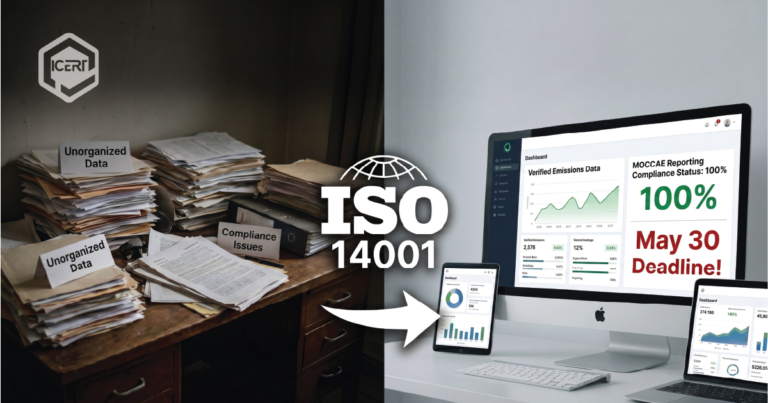
- ISO 14001 ensures you are green.
- ISO 26000 ensures you are ethical.
When these three work together, your organization becomes an unstoppable force in the ISO certification in Dubai market. You aren’t just a vendor; you are a pillar of the community and a trusted partner to the government.
From Ethics to Excellence
The transition from “charity” to “strategic social responsibility” is the defining business move of 2026. As the UAE continues to push the boundaries of what a modern, sustainable nation looks like, businesses must decide: will you be a leader, or will you be left behind?
By embracing the principles of ISO 26000, you aren’t just doing the “right thing”, you are doing the “smart thing.” You are building a resilient, respected, and highly competitive organization that is ready for the next decade of growth in the GCC.
Is your social responsibility strategy a cost center or a competitive advantage?Contact ICERT Gulf today for a comprehensive consultation. Let our industry experts help you turn your ethical leadership into a powerful engine for growth and secure your place at the forefront of the UAE’s bright future.