
As we navigate the industrial and technological landscape of 2026, the UAE has firmly established itself as a global leader in sustainable growth. However, for the modern Operations Manager, Chief Operating Officer, or Facility Lead, the conversation has moved beyond mere “corporate social responsibility.” In today’s GCC market, sustainability is synonymous with operational excellence.
With the May 30, 2026, deadline for full compliance with the UAE Climate Change Law now in effect, energy management has transitioned from a backend utility concern to a frontline operational strategy. At ICERT Gulf, we help organizations move past “green-washing” and into the realm of resource intelligence. By adopting ISO 50001:2018, your organization isn’t just saving the planet; it is optimizing its core “nervous system” for maximum reliability and output.
The 2026 Mandate: From Maintenance to Mandatory Compliance
The regulatory environment in the UAE has undergone a seismic shift. Federal Decree-Law No. 11 of 2024 (the “Climate Change Law”) is a landmark piece of legislation that has officially moved carbon reporting from a voluntary “good-to-have” CSR activity to a mandatory legal requirement for businesses.
For any ISO certification company, the message to clients is clear: carbon is now a legal liability. This law applies to all public and private sector entities, including those operating within UAE Free Zones.
Why the Risk Profile for UAE Companies Has Shifted:
- Mandatory Measurement: Businesses must now regularly measure and track their Greenhouse Gas (GHG) emissions.
- Legal Reporting: Companies are legally required to submit periodic emissions reports to the Ministry of Climate Change and Environment (MOCCAE) (External Link).
- Third-Party Verification: For large emitters, specifically those exceeding 0.5 million metric tons of CO2e – there are even stricter requirements for third-party verification and registration in the National Carbon Registry.
By partnering with an experienced ISO certification provider, operations teams can automate this verification process. ISO 50001 ensures that your data is “audit-ready” for federal inspectors, turning a legal burden into a streamlined operational workflow.
Critical Deadlines and Substantial Financial Risks
The “wait and see” approach is no longer viable. The UAE government has provided a clear roadmap for the transition, and the window for adjustment is closing.
- Effective Date: The law officially came into force on May 30, 2025.
- The Grace Period: Businesses were granted a one-year transition period to “adjust their status.”
- The Hard Deadline: Full compliance and reporting systems must be in place by May 30, 2026.
Failing to meet these requirements carries heavy penalties. The law introduces a tiered fine system designed to ensure the UAE hits its Net Zero 2050 targets. Non-compliance, failing to report, or missing reduction targets can result in:
- Administrative fines ranging from AED 50,000 to AED 2,000,000.
- Double penalties for repeat violations.
Working with a professional ISO consultancy in UAE is the most effective way to mitigate these financial risks while simultaneously improving your facility’s performance.
Efficiency in Motion: The Blueprint for Resource Intelligence
In 2026, the competitive edge in Dubai and Abu Dhabi belongs to those who view energy as a variable process input rather than a fixed overhead cost. Whether you are running a high-tier data center, a manufacturing plant in JAFZA, or a luxury hotel complex, your operational efficiency is tethered to how intelligently you consume resources.
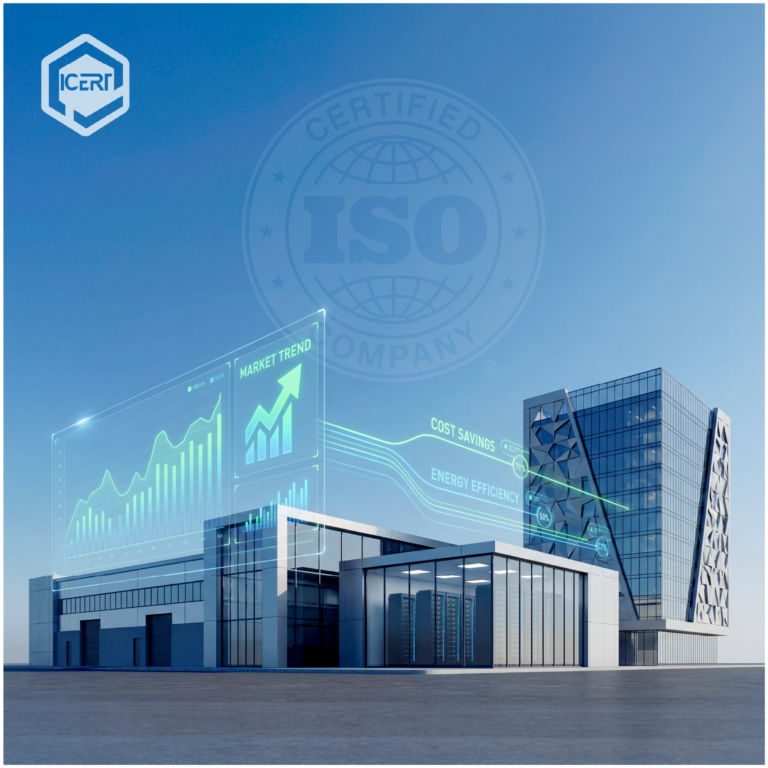
An Energy Management System (EnMS) based on ISO 50001 transforms “dark data” from your meters and sensors into actionable insights. This is where the support of ISO certification consultants GCC becomes invaluable, helping you build a data-driven facility that satisfies both the legal team and the production floor.
Energy as a Performance Metric: Beyond the Utility Bill
For a high-performing operations team, ISO 50001 is a process-refinement tool. It moves energy consumption from a passive expense to a manageable Key Performance Indicator (KPI). Regional data suggests that facilities implementing a robust EnMS often see performance gains of 30% or more by eliminating “energy leaks.”
1. Reduced Equipment Downtime
Energy spikes and anomalies are often the first signs of mechanical failure. By monitoring energy profiles via ISO 50001 protocols, maintenance teams can identify failing motors, compressors, or HVAC components weeks before they cause a shutdown. This shift toward predictive maintenance is a cornerstone of operational excellence.
2. Optimised Load Management
In a climate as demanding as the UAE’s, peak-demand charges from utilities like DEWA or TAQA can be astronomical. ISO 50001 provides the framework to “load shift,” moving non-critical, energy-intensive processes to off-peak hours. This reduces the thermal strain on your infrastructure and significantly lowers your operational expenditure.
3. Eliminating Process Waste
The standard forces a deep dive into Energy Performance Indicators (EnPIs), identifying “phantom loads” and inefficient workflows. By refining these processes, an ISO certification company helps you ensure that every kilowatt-hour consumed contributes directly to production.
Integration into Core Business Strategy
Because carbon is now a legal liability, ISO 50001 implementation must be integrated into your broader business strategy. It affects:
- Risk Registers: Climate risk must now be part of a company’s formal Enterprise Risk Management (ERM).
- Audits: Emissions data is now subject to regulatory and internal audits, similar to financial data.
- Contracts: Many B2B contracts in the UAE now require climate-data sharing to ensure the entire supply chain stays compliant.
Many leaders find that integrating these efforts with ISO 9001 consultants in UAE creates a holistic “Quality + Efficiency” culture. Achieving ISO 9001 certification in Dubai alongside energy standards ensures that your processes are lean, consistent, and sustainable.
Local Expertise for Complex UAE Facilities
Navigating the technical nuances of UAE infrastructure requires more than a theoretical understanding of the ISO 50001 standard (External Link). A manufacturing site in the Jebel Ali Free Zone (JAFZ) faces different humidity and cooling challenges than a high-tech data center in Masdar City.
Choosing a local ISO certification company like ICERT Gulf ensures that your EnMS is tailored to:
- UAE Building Codes: Aligning with Estidama or Al Sa’fat requirements.
- Climatic Realities: Optimizing cooling loads for the unique Middle Eastern heat.
- Regulatory Frameworks: Meeting the specific reporting formats required by the UAE federal authorities.
Whether you need ISO certification in Dubai or are looking for ISO consultants in Abu Dhabi, our team provides the localized technical insight necessary for a successful implementation.
Why Partner with ICERT Gulf for Operational Success?
At ICERT Gulf, our mission is to bring clarity to your certification efforts. We empower organizations to achieve their goals with innovative, efficient, and client-focused solutions.
- 15+ Years of Expertise: We have evolved alongside the UAE’s industrial sectors.
- 600+ Projects Completed: From heavy industrial plants to ISO certification for IT services.
- 500+ Satisfied Customers: We are passionate about solving the real-world operational problems our clients face.
We maintain Integrity & Transparency in every engagement, ensuring your journey toward ISO certification in GCC states is smooth and impactful. As a premier ISO certification provider, we focus on delivering measurable results, because your success is our success.
Future-Proof Your Facility Today
The May 30, 2026, compliance deadline is a catalyst for change. As energy prices fluctuate and regulations tighten, the organizations that lead the market will be those that treat energy as a strategic operational asset.
Is your facility ready for the May 30 compliance deadline?Don’t let inefficiency or penalties of up to AED 2 million disrupt your production. Contact ICERT Gulf today to speak with our technical experts. Let us help you turn your energy data into a competitive operational advantage and ensure your organization is fully aligned with the UAE Net Zero 2050 strategy.