Turning Energy Consumption into a Competitive Advantage in the UAE
In the rapidly evolving economic landscape of the UAE, fueled by ambitious development and significant industrial growth in hubs like Dubai, Abu Dhabi and Bahrain, efficient energy management is no longer optional, it is a competitive necessity. With rising utility costs, particularly for cooling and industrial processes, and a growing national commitment to sustainability goals, organisations face pressure to operate smarter and greener.
The UAE’s vision for a greener economy, aligned with initiatives like the Dubai Clean Energy Strategy, makes adopting international standards crucial. ISO 50001 is the global framework designed to meet this challenge head-on. It provides a structured path to systematically improve energy performance, leading directly to financial savings and environmental responsibility.
This blog, prepared by the expert ISO consultancy in UAE and Bahrain, addresses the most common questions business leaders have about leveraging this powerful standard.
1. What is ISO 50001 and how is it profoundly relevant to the UAE or Bahrain market?
Core Definition: ISO 50001 is the international standard that sets the requirements for establishing, implementing, maintaining, and improving an Energy Management System (EnMS). It uses the Plan-Do-Check-Act (PDCA) cycle to drive continual improvement in energy performance, efficiency, and consumption.
UAE Specifics: ISO 50001 is profoundly relevant to the UAE due to the country’s significant energy consumption profile.
- Cooling Load: A huge proportion of commercial and residential energy consumption in Dubai is dedicated to cooling and climate control. An EnMS helps optimise HVAC systems and building envelopes to drive efficiency.
- Industrial Processes: For heavy industries and manufacturing located in areas like Jebel Ali or industrial zones in Abu Dhabi, energy usage is a massive operational cost. ISO 50001 implementation identifies these “Significant Energy Uses” (SEUs) and enforces controls to reduce wastage.
- Alignment with National Goals: Certification aligns businesses with the UAE’s sustainability targets and green building standards, demonstrating corporate responsibility and often improving standing in government tenders.
2. What are the primary, tangible business benefits of achieving ISO 50001 certification?
The decision to implement an EnMS delivers compelling returns across several key areas:
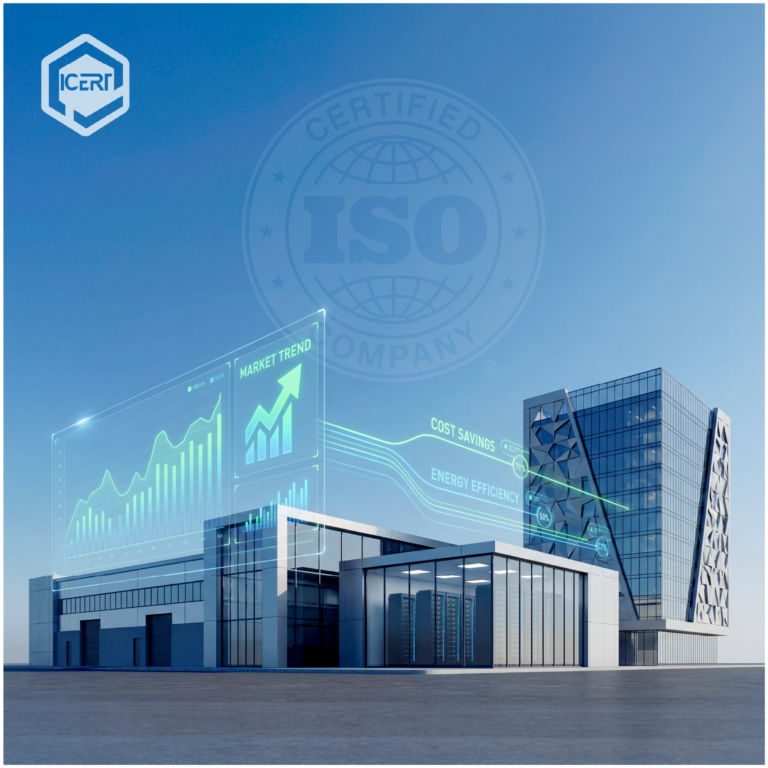
- Cost Reduction (Direct Savings): The most immediate benefit is the direct and systematic reduction in energy consumption, translating into substantial savings on utility bills.
- Reputation & CSR: Achieving this certification enhances your brand image, demonstrating a commitment to environmental responsibility that meets stakeholder expectations and aligns with national sustainability goals. This is a critical factor for international partners.
- Compliance & Risk Mitigation: It provides a proactive framework for meeting current and future energy-related legal and regulatory requirements in the UAE, mitigating the risk of non-compliance penalties and demonstrating due diligence.
- Operational Efficiency: The EnMS requires measuring and monitoring energy usage, giving management a better understanding and control over consumption patterns, which leads to improved operational processes and better capital investment decisions.
- Competitive Edge: Certification differentiates your business when bidding for large contracts, especially those issued by energy-conscious organisations or government entities, positioning you as a preferred ISO certification provider.
3. Can ISO 50001 be seamlessly integrated with other ISO standards I already have (e.g., ISO 9001, 14001, 27001)?
Yes, absolutely. ISO 50001 is designed for seamless integration.
Harmonised Structure: Like all modern ISO standards (including ISO 9001, ISO 14001, and ISO 27001), ISO 50001 adheres to the High-Level Structure (HLS), which provides identical core clauses and terminology. This structural harmony makes integration straightforward.
Efficiency Gains: Combining your EnMS with other systems (e.g., Quality and Environmental) into a single Integrated Management System (IMS) dramatically reduces redundancy in:
- Documentation: One set of high-level policies and procedures can cover multiple standards.
- Audits: Conducting a single, combined audit saves significant time and resources compared to multiple separate audits.
- Resource Allocation: Management review and internal audit teams can function more efficiently.
As an expert ISO certification company, ICERT helps clients achieve this synergistic integration, maximising efficiency while maintaining full compliance.
4. What is an Energy Baseline (EnB) and why is it critically important in ISO 50001?
The Energy Baseline (EnB) is arguably the most critical component of the entire standard.
Definition: The EnB is a quantitative reference providing a clear basis for comparison of energy performance. It represents your organisation’s energy usage during a defined, representative period before the implementation of the EnMS.
Measurement & Improvement: The adage “you can’t manage what you don’t measure” is the core principle here. The EnB is crucial because:
- It allows you to set meaningful Energy Performance Indicators (EnPIs) and Energy Objectives.
- It serves as the benchmark against which all future savings and improvements are measured, allowing you to prove the financial benefit of the EnMS.
Expert Insight: The EnB factors in relevant variables (such as weather data, production output, or facility occupancy) to ensure an accurate performance assessment. This is essential, for example, to differentiate increased cooling consumption due to hotter weather from true operational inefficiency.
5. Who should I consult for expert ISO 50001 certification guidance in the UAE?
Choosing the right ISO consultancy in UAE or Bahrain is vital for turning the standard into actual savings and compliance. When looking for a partner, focus on:
- Experience & Local Context: The consultant must have a proven track record (like ICERT’s 15+ years of expertise and 600+ projects) and a deep understanding of the UAE’s specific energy market, regulatory landscape, and climate challenges.
- Holistic Approach: The partner should provide guidance that goes beyond simple audit preparation, focusing on long-term energy performance improvement and cost reduction.
- System Integration: Look for experts who can seamlessly integrate ISO 50001 with your existing QMS or EMS.
Your Value Proposition: ICERT is a specialised ISO certification provider with a dedicated team of industry experts. We guide businesses in Dubai, Abu Dhabi or Bahrain from the initial energy review and baseline definition through to successful certification and sustained energy performance, ensuring your investment delivers maximum returns in savings and sustainability.
Energise Your Future with ISO 50001 – Your Partner in Sustainability & Savings
ISO 50001 offers the dual benefit of fulfilling your environmental responsibility while providing a clear pathway to significant financial gain. It is the strategic tool needed to manage one of your largest operational costs in the UAE.
Ready to transform your energy management and turn consumption into a competitive advantage?Contact ICERT, your trusted ISO certification company and expert ISO consultants in UAE or Bahrain, for a personalised consultation on implementing your ISO 50001 EnMS today!